
- Insight
How peristaltic technology is transforming chemical dosing
Expert Q&A
By Mike St. Germain, Customer and Market Insights Lead, Industrial Sector at Watson-Marlow
Expert Q&A
By Mike St. Germain, Customer and Market Insights Lead, Industrial Sector at Watson-Marlow
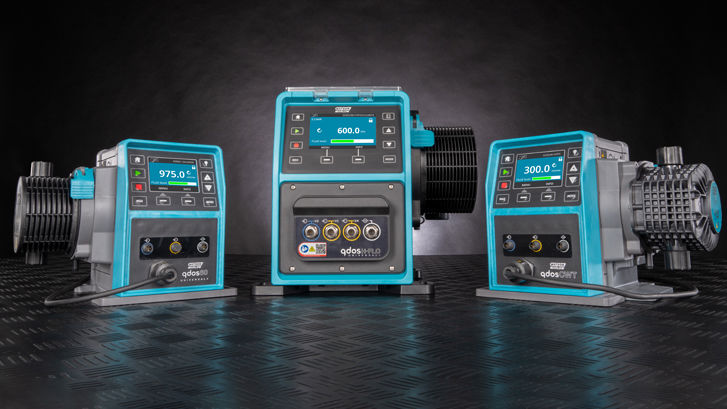
With reduced on-site staff at sites, there is an increasing demand for more reliable, low-maintenance chemical dosing solutions. Operators are increasingly prioritising modular dosing systems, predictive maintenance and equipment that requires minimal intervention. Mike St. Germain, Customer and Market Insights Lead, Industrial Sector at Watson-Marlow, here explains how these shifts are accelerating the move to peristaltic technology and why more companies are choosing Qdos® chemical metering pumps for safer, simpler, and more efficient chemical dosing.
Whether it is a water treatment plant, an oil refinery or a pulp and paper mill, companies are looking for solution providers with process knowledge in a wide range of chemical metering applications and experience to lessen the burden on plant personnel.
One of the things that has changed over the last ten years, and continues to increase, is the need for complete solutions. Municipal and industrial plants don’t want to have to build systems, that’s not their expertise, and they prefer suppliers who can build them complete solutions. At Watson-Marlow, we have our Qdos pods and chem-feed skids, along with our expertise, which allows us to design systems that are easy to install, operate and maintain.
What makes Qdos unique is its unmatched level of simplicity for installation, operation and maintenance. From a safety point of view, there’s less chance you are going to have to deal with chemical because it is captured in the pumphead, and when it fails an alarm goes off. It brings a safer operation as the user doesn’t have to handle any tubing, chemical or clean up any chemical. They just have to replace the pumphead. Sealed pumpheads for chemical containment, leak detection software and integrated alarms for early fault detection are all features of Qdos which make sites safer.
A major chemical vendor can standardise on integrating Qdos pumps into its pods and skids to provide reliable dosing and avoid unplanned, stressful maintenance at customer sites, such as paper and pulp mills or water treatment sites, in multiple countries.

Installation, operation, maintenance and safety are some big reasons, but also chemical savings through accuracy. Qdos has a turndown ratio of up to 30,000:1 which is unmatched, so end users can be confident they aren’t overfeeding. Low maintenance of Qdos avoids process breakdown and there is no need to remove pumps from a process when replacing pumpheads, which simplifies the spares needed on site. Maintenance is also quick with no training required, which is unmatched by any other peristaltic or metering technology. Qdos pumps provide chemical containment, so there are no messy leaks of polymer to clean up. As it is a low shear pump, it protects the integrity of chemicals which is especially important with polymer chemistries.
It literally takes seconds to replace the Qdos pumphead and only a few minutes to isolate suction and discharge; this compares favourably to other peristaltic pumps as the Qdos pumphead should not require replacement more than once per year. Diaphragm pumps work well most of the time but require maintenance to ensure consistency and accuracy. This includes cleaning suction and discharge valves which include several pieces that need to be replaced in order, or pumps won’t work.
Due to a lack of resources in plants, the cost of downtime has become even more critical, with profit margins being challenged and predictive maintenance becoming increasingly important. Having equipment that lets you know you are approaching failure helps you avoid the messes and challenges that happen if equipment fails, when it is a lot more time consuming. Peristaltic technology lets you monitor how the tubing is doing. The Qdos Pressure Sensing Kit provides real-time pressure condition monitoring, allows you to easily detect leaks and blockages with configurable alarms for process monitoring.

Precision and accuracy are always important in chemical metering. More important is repeatability. You want to know that a pump you set up today delivers the same results with those settings in six months. You also want to feed accurately at very low level. Effective chemical feed reduces your chemical costs and also water that has to be treated on the wastewater side. Qdos pumps have an accuracy of ±1% and repeatability of ±0.5%, with a flow rate from 0.1 mL/min (0.001 USGPH) and this accuracy results in reduced chemical costs.
If you are pumping abrasives, viscous and off-gassing chemicals, or expansive blended products that need to be fed accurately at low levels, that’s where Qdos makes a difference. The turndown ratio, simplicity of operation and maintenance of Qdos just makes it easier for users.
Emulsion polymer and bleach/sodium hypochlorite have always been challenges for metering pumps – eating up valuable time to keep them working accurately and reliably. But the Qdos 60 PU (polyurethane) is optimised for low-shear, gentle pumping to protect polymer chains and maintain product integrity. Valve‑free pumping eliminates vapor lock issues, which means Qdos is a great choice for handling sodium hypochlorite with our SEBS pumphead. It also eliminates handling of harmful chemistries such as strong acids and biocides (oxidising and non-oxidising) for a safer operation.
When you deal with viscous products like polymers, defoamers, and you have spills or failures, cleaning requires special materials. You also need to make sure you don’t leave any residual because it could be a slip hazard. Users of Qdos love it because they don’t have to deal with any of this.

One of the important trends we see now compared to ten years ago is there’s less staff at sites, so municipal or industrial companies need equipment to operate reliably, and equipment that alerts them when there are issues and alarms that are easily identifiable. There has been a noticeable shift to peristaltic technology as the market recognises that peristaltic pumps solve problems arising with other pumping technologies, which typically require maintenance and people. There is an increase in recycling and reuse to protect our water resources, and a desire for solution providers with support resources to provide timely support. Whether it is membrane or filtration technology, there is some level of chemical feed needed. If you have chemical feed pumps that effectively treat the water while minimising the chemistry that is used, it will simplify recycling and reuse of the water.
Viscous, abrasive and off-gassing chemistries have always presented challenges to diaphragm metering pumps with check valves, that could be losing prime, or viscous products that clog valves. This requires support to get the pump working. With peristaltic pumps, the utilities operators don’t have to deal with that because we don’t have check valves, so you won’t lose prime and you can trust the pump’s accuracy. This reduces the amount of attention they must pay to their chemical feed equipment, and it is driving more companies towards peristaltic pumps and away from diaphragm pumps.
Utilities are becoming more educated on peristaltic pumps, and we are seeing increasing numbers using our solutions. They are no longer relying on swimming pool peristaltic pumps for heavy duty industrial environments. Peristaltic pumps also bring a level of simplicity and safety to reduce time spent keeping water treatment plants running. There is also more confidence in the pressure capabilities of pumps like Qdos now.
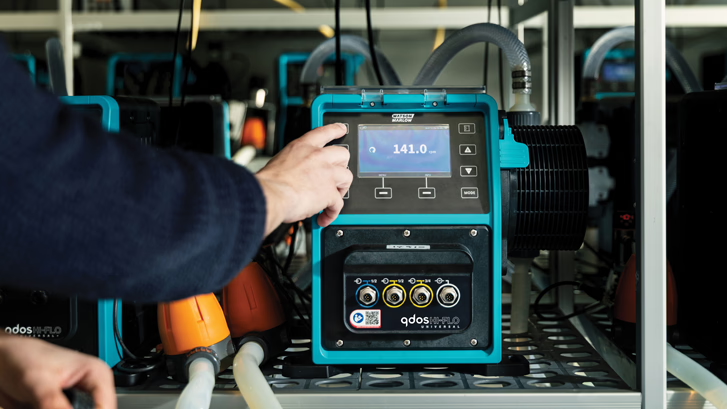
We continue to develop products that have longer life, like the Qdos CWT™ (Conveying Wave Technology™) that adds a lifetime of 2-4 times to our standard pumpheads. This results in less waste. By feeding chemistries effectively and accurately, our customers are also ensuring they are not wasting chemical and the process is treated how it should be.
Our development of the Qdos CWT pump and work to identify ways to extend pumphead and hose life have contributed to sustainability. The design of the Qdos HI-FLO, with flow rates to 600 L/h (158.5 USGPH), which allows pumpheads to be disassembled for recycling is another benefit from Watson-Marlow.
Mike St. Germain is Customer and Market Insights Lead, Industrial Sector at Watson-Marlow Fluid Technology Solutions (WMFTS). With almost 35 years of experience in water and wastewater treatment, and seven years with WMFTS, Mike works closely with customers to understand their operational challenges and responsibilities, helping them identify the right solutions and build effective long-term partnerships.

Accurate, versatile chemical pumps for process optimisation
Accurate, low-maintenance peristaltic pumps to ensure chemical vendors maintain reliable...
Water and Wastewater
Chemical metering applications within the Environmental sector
To order a product or ask a question call +603 55 69 9650 or