
- Case Study
Watson-Marlow and Qdos pumps support GEL’s high accuracy, zero carbon production of lithium carbonate
How GEL optimises zero‑carbon lithium extraction with Watson‑Marlow 630 and Qdos 60 peristaltic pumps
How GEL optimises zero‑carbon lithium extraction with Watson‑Marlow 630 and Qdos 60 peristaltic pumps
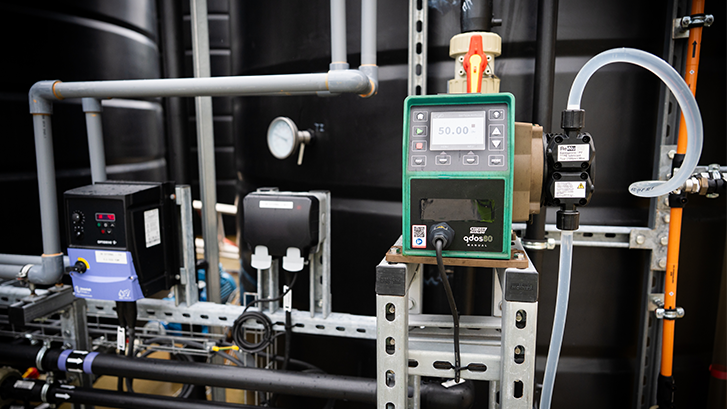
Geothermal Engineering Ltd (GEL) relies on Watson-Marlow 630 and Qdos® peristaltic pumps to deliver the precision dosing, reliability and operator safety required for its mineral extraction process.
GEL started commercial scale production of zero-carbon lithium carbonate from its geothermal power plant at United Downs in Cornwall, England, in February 2026. Lithium carbonate is the key raw material used in the production of rechargeable batteries, including those that power electric vehicles and energy storage systems. GEL has the capacity to produce 100 tonnes per annum (tpa) and aims to scale up to over 10,000 tpa over the next decade.
Hot water from a granite fault zone in Cornwall is also being used to create electricity after GEL drilled down 5 km, the deepest on-shore well in the UK. The water will help drive turbines to generate electricity for 10,000 homes, according to GEL.
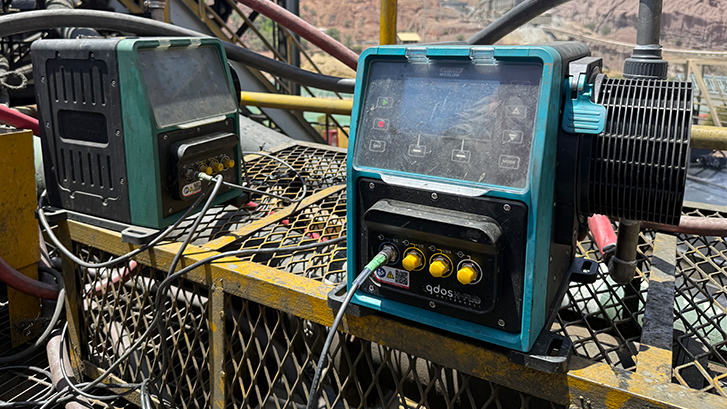
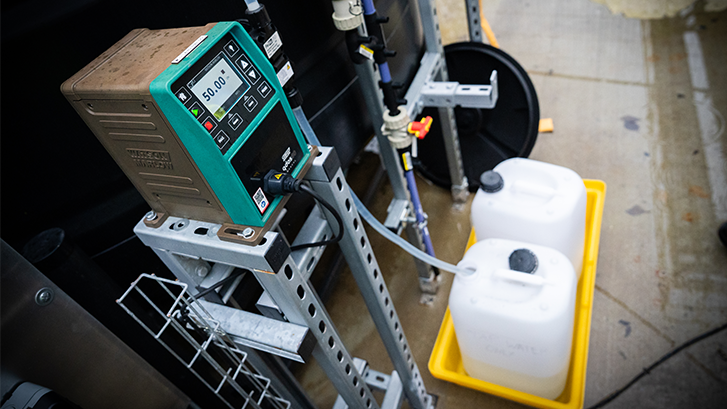
As part of the lithium carbonate processing, two Qdos 60 chemical metering pumps are dosing acid and alkali in the removal of impurities. One Qdos pump is dosing sodium hydroxide to raise the pH level to 11 to remove impurities such as zinc, iron, silicon, and phosphorous; after the impurities have been filtered out, the other Qdos pump doses hydrochloric acid for pH correction. The pumps are being used for approximately 20 minutes per tank, six times per week in the removal of impurities/brine stability stage.
Qdos chemical metering pumps deliver accurate, reliable process chemistry while providing simple, safer maintenance for GEL. They are ideal for the contained dosing of acids and alkalis.
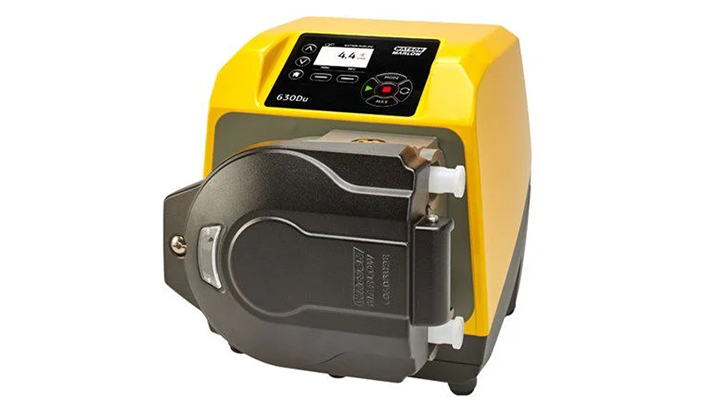
Later in the process, three Watson-Marlow 630 pumps are used to transfer lithium brine and extract the lithium precipitate, as well as other transfer tasks.
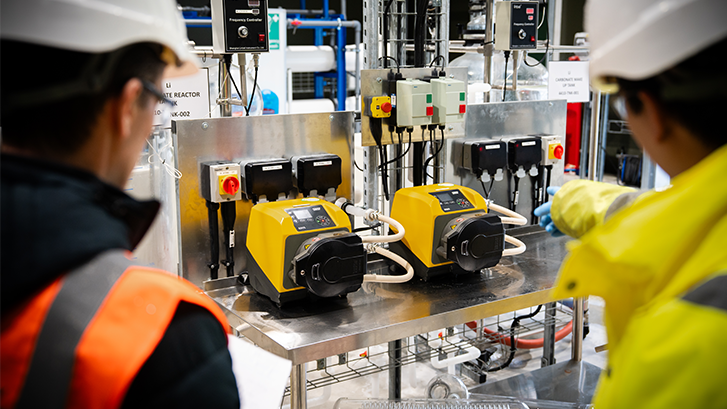
Reliable accuracy means GEL can maximise recovery and produce consistent lithium quality. The portability of the Watson-Marlow 630 pumps means they can be moved around the plant and offer flexibility for changing process needs.
Tom Lees, Process Scientist at GEL, said: “We have found the Watson-Marlow and Qdos pumps easy to use, rather than strokes per minute with other pump types. We need to get the pH level above 11 so the accuracy of the pump is important for that and the Qdos pump keeps the acid contained within the pump with no spillages or risk to operators.
“The Watson-Marlow 630 and Qdos pumps don’t lose accuracy over time like other pump types do, and they are well known in the industry so some of our operators have used the pumps before and are familiar with them. We know we can rely on the pumps to dose what we ask them to dose.
“When we are looking to further optimise what we get out of the ground, we will need more accuracy and we know we will be able to get that with the Watson-Marlow and Qdos pumps.
“Lithium comes from an evaporator to a tank, and one of the Watson-Marlow 630 pumps is dosing sodium carbonate which activates the precipitation reaction. The second 630 pump alongside the other one transfers out the precipitate slurry to the centrifuge. A third 630 pump has been used to transfer reagent, sodium carbonate and brine and can do 5-7 litres per hour so flow control is important. The speed settings are very versatile
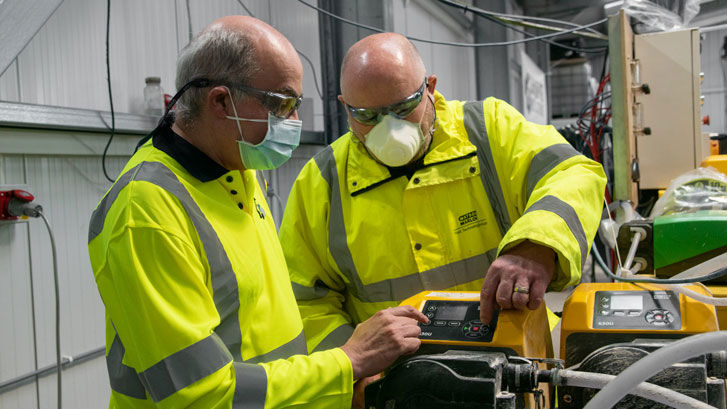
“We move the pump around the site and changing the tubing, putting it back together again, is really easy to do. We don’t need specific training to use the pump and that’s important.”
The Watson-Marlow 630 pump is handling hot lithium brine up to 140 litres per hour and sodium carbonate up to 150 litres per hour. The pumps’ reliability supports uptime, maintains operator confidence and ensures safer chemical containment.
Charlotte Wilkins, Lithium and Projects Manager at GEL, said: “Dosing sodium carbonate accurately is important for us because sodium carbonate is added in a calculated quantity to ensure that all of the lithium chloride reacts to form lithium carbonate, our product.
“Dosing sodium carbonate accurately is important for us because sodium carbonate is added in a calculated quantity to ensure that all of the lithium chloride reacts to form lithium carbonate, our product.”
“Overdosing would mean that we wasted expensive reagents. Underdosing means that we would leave lithium behind.
“We know we have local support for the pumps should we need it and the pumps have always been reliable. Watson-Marlow is well known in the industry and they happen to be based just down the road from our plant.”
GEL is a leading developer of geothermal energy in the UK with the aim to develop geothermal power, heat, and Environmental, Social and Governance (ESG) compliant, ultra-low carbon lithium projects. The geothermal fluid that is used for the GEL power plant comes from the deepest well ever drilled in the UK soil, at over 5 km deep, according to GEL. The water reaches the surface at 140 °C and contains over 340 parts per million of battery-grade lithium carbonate, making it among the highest lithium concentrations in the world. Once the geothermal fluids pass through the power plant, the temperature is reduced to 50 °C, the optimal temperature for lithium extraction.
Lars Varnbueler, Customer and Sector Insights Lead, Mining, at WMFTS, said: “Accurate acid and alkali dosing is critical because poor pH control can lead to inconsistent impurity removal, excess reagent use and avoidable lithium losses. Qdos pumps help our customers protect downstream recovery, improve process consistency and handle hazardous chemicals more safely.
"Watson-Marlow 630 pumps are a proven, widely used peristaltic pump platform for demanding duties. In lithium processing, they provide the reliable, repeatable transfer needed for sodium carbonate addition and lithium brine handling, helping operators protect recovery, maintain product consistency and reduce maintenance through a simple, fully contained design with strong control flexibility.
Watson-Marlow 630 pumps and Qdos chemical metering pumps have helped GEL to achieve:
Updated
Qdos H-FLO pumps deliver chemical savings, environmental protection and safer conditions
Case Study
Battery metals will be critical in the future as the world moves towards more environmentally...
Case Study
Bredel is widely used in mining applications to transfer corrosive liquids, such as hydrochloric...
Case Study
To order a product or ask a question call +65 6455 7411 or