
- Case Study
Qdos CWT pumps help Zereau’s filters eliminate drug residues in hospital wastewater
Filtration systems featuring Qdos CWT pumps help hospitals reduce pharmaceutical pollution and water contamination
Filtration systems featuring Qdos CWT pumps help hospitals reduce pharmaceutical pollution and water contamination
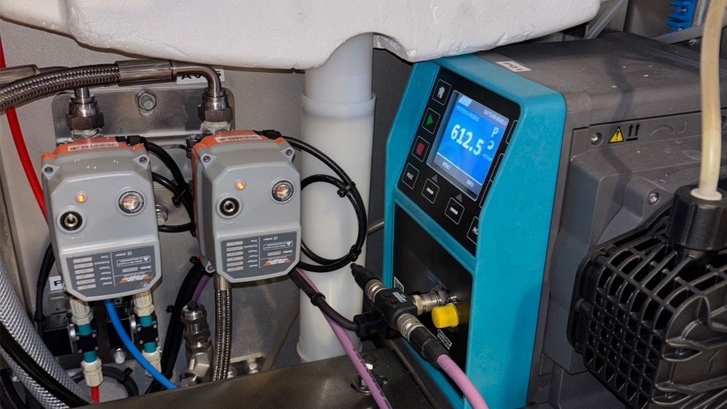
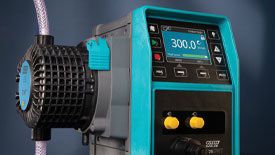
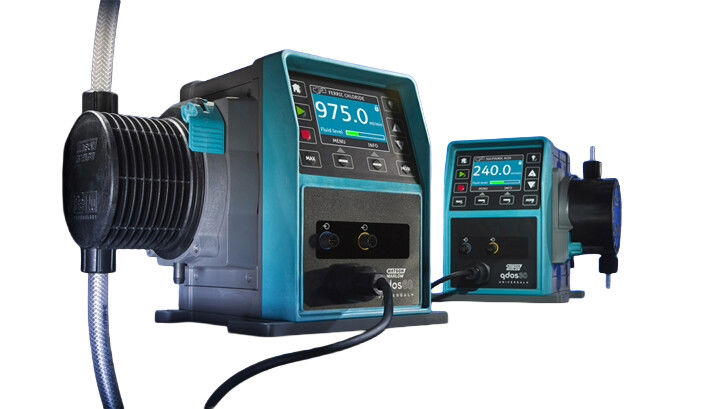
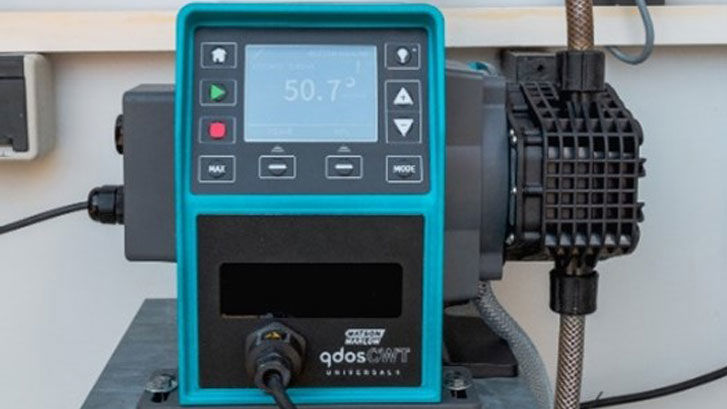
Qdos® CWT™ chemical metering pumps from Watson-Marlow Fluid Technology Solutions (WMFTS) are being used in pioneering systems to filter drug residues from wastewater at hospitals in The Netherlands and beyond, in an important step towards ensuring cleaner waterways and more sustainable healthcare.
Pharmaceutical residues pose a serious risk to drinking water and aquatic ecosystems. Removal of antibiotic and medicine residues in a hospital’s wastewater, where concentrations of drug are highest, is the most effective solution.
The Netherlands-based Zereau provides innovative wastewater treatment technology for medical substances and residues in a hospital’s wastewater, offering a sustainable solution for nuclear medicine departments, radiology departments, hospital pharmacies, and intensive care units (ICUs).
Zereau’s filtration systems—each using a Qdos CWT (Conveying Wave Technology™) peristaltic pump—include:
These systems are designed to capture and filter urine containing contrast agents, and various (nuclear) medical residues, which patients excrete via urine in large quantities (over 50% of the administered dose) within up to two hours. Using specialised toilet bowls with urine separation and integrated filters, Zereau’s technology not only removes harmful substances but also enables the recovery of valuable raw materials used in medical products such as iodine and gadolinium.
“We wanted the heart of our system to be reliable, which is why we went with the Qdos CWT pump. The reliability is very important, there are a lot of parameters that we can adjust inside the pump’s software.”
Bart Boots, co-founder and Operational Director at Zereau, said: “With our toilet systems ContrastCatch and RadiCatch, after the urine has been extracted to an internal tank, the Qdos CWT pump pumps the urine through our filters with a steady flow. We are using the Qdos because we can change the volume of the pump very accurately and we know that the CWT pumpheads come with the guarantee for three years.
“The MediCatch is an easy to install system where hospitals can pour in their collected urine, maybe in an intensive care unit which is using urinary catheterisation for its patients.
“We wanted the heart of our system to be reliable, which is why we went with the Qdos CWT pump. The reliability is very important, there are a lot of parameters that we can adjust inside the pump’s software.”
Every year in the Netherlands at least 190,000 kg of medicine residues from urine and faecal matter end up in surface water and groundwater, according to the Dutch National Institute for Health and the Environment (RIVM). For radiology departments, Zereau’s filtration device provides a step toward minimising the environmental footprint of medical residues and in particular contrast media used in medical imaging.
Users of Zereau’s systems are disposing of their liquid medical waste responsibly in a more sustainable way while also reducing their water footprint and waste.
Mattijs Maris, co-founder and Chief Commercial Officer at Zereau, said: “You’re simply not allowed to discharge radioactive wastewater. There’s an alternative that’s just storing all the water in a multiple tank system because you can wait while the radionuclides decay into non-radioactive products. But this alternative solution is old fashioned, and you require a lot of space. You can’t accommodate the expected growth in the number of therapies. What will happen is that there’s a lot of wastewater being excreted in the hospital because patients are hospitalised, therefore the hospital has the problem with radioactivity in the wastewater. If they don’t have tanks, then they can’t treat patients; if they have tanks, they may lack capacity in the tank and are very limited in growing numbers. Our filtration devices offer a simple solution for hospitals that make tanks obsolete or increase the tank capacity without expansion of the volume, and meet tightening regulations in this area.”
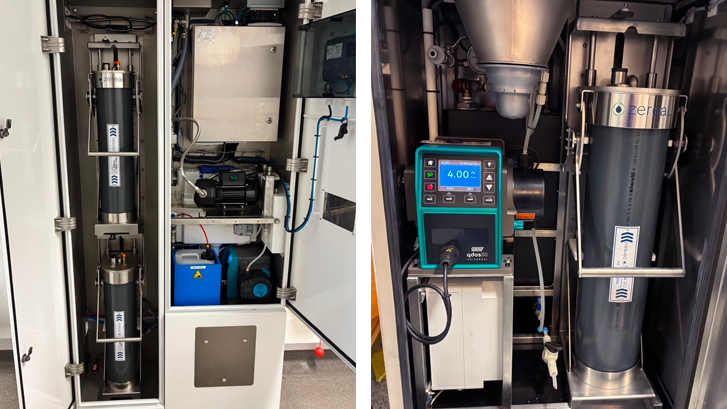
The Martini Hospital in Groningen was the first hospital in the Netherlands to filter the wastewater from its hospital pharmacy with MediCatch. The filter in Zereau’s system contains various granules to which the medicine residues stick. A long-life filter ensures complete removal. During a four-month period when the pharmacy at Martini Hospital poured all drug waste through the Zereau filter, 99% of drug residues were filtered out.
Annemarie van der Aart, Head of Pharmacy at Martini Hospital, said on a film made on behalf of the NVZA, the Dutch Association for Hospital Pharmacists: “We have a big problem in The Netherlands with medicine residues ending up in our water and having a negative effect on the environment. The possibilities of this [Zereau] filter are endless, it’s a fantastic solution which is actually very easy to apply and removes medicine residues from our wastewater to a very large extent. We are very proud that we as hospital pharmacists at the Martini Hospital can contribute to sustainable care in this way.”
Patients from the cardiology department at Radboudumc, a university medical centre in Nijmegen, The Netherlands, and the Martini outpatient radiology clinic use a special toilet after undergoing diagnostic exams. The toilet filters the urine, which contains the contrast media. At the Martini outpatient radiology department, up to 50% of dosed iodine or gadolinium (CT and MRI) is being filtered with ContrastCatch.
As well as the Netherlands, Zereau’s filter systems are being used in general and university hospitals in Belgium, Germany, Czech Republic, Italy, France and the United Kingdom. In 2026, Zereau will install its first filtration system in Mexico.
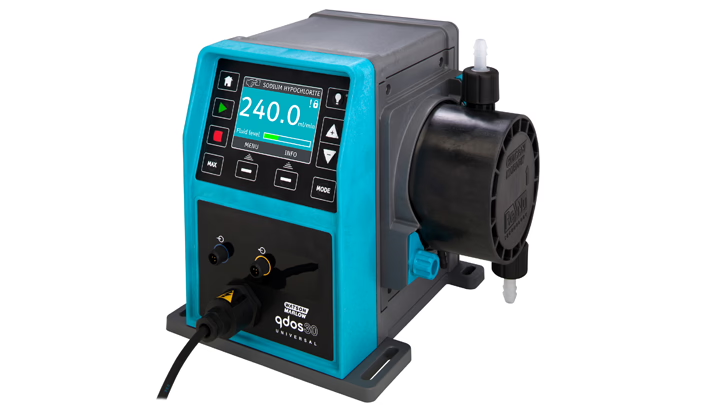
Conveying Wave Technology employs the peristaltic principle to operate a unique fluid contact element. The Qdos CWT pump provides significantly longer service life than traditional tube designs.
Arthur Van Geet, Sales Team Leader for WMFTS in the Netherlands, said: “Zereau went for the Qdos CWT due to its reliability and low maintenance. The CWT is taking out the fluid from the toilet and flushing into the Zereau filter. It is easy to operate and has a long lifetime. Zereau knows that when the pump is installed, they don’t have to do maintenance visits every couple months. The lifetime of a Qdos CWT pump is two to three years and it safely contains the fluid during transfer.”
Conveying Wave Technology™ delivers all the benefits of a peristaltic pump but with significantl...
Product
Flow rates to 2,000 ml/min (31.7 USGPH) and pressures up to 9 bar (130 psi).
Pumps - cased pumps
Case Study
Ergon has switched to Qdos CWT for its reliability and longer life to dose chlorine
Case Study
Case Study
A wastewater treatment plant (WWTP) in Germany is taking an innovative approach to chemical...
Case Study
To order a product or ask a question call +603 55 69 9650 or